Seiko Epson Corporation
Seiko Epson Corporation
Advancing Digital Customer Experience: Seiko Epson’s DX Initiatives with Ptengine
Advancing Digital Customer Experience: Seiko Epson’s DX Initiatives with Ptengine
Interview Highlights
Interview Highlights
① Improving customer experience depends on website optimization, and A/B testing data has become a common language with business departments.
② By bringing together the people responsible for all company websites, including the semiconductor business website, improvements can be smoothly promoted through an understanding of testing and barrier-free collaboration.
③ Through study sessions and new employee training, Ptengine access analysis is promoted, enabling continuous internal adoption and advancing the foundational infrastructure for company-wide website optimization.
① Improving customer experience depends on website optimization, and A/B testing data has become a common language with business departments.
② By bringing together the people responsible for all company websites, including the semiconductor business website, improvements can be smoothly promoted through an understanding of testing and barrier-free collaboration.
③ Through study sessions and new employee training, Ptengine access analysis is promoted, enabling continuous internal adoption and advancing the foundational infrastructure for company-wide website optimization.
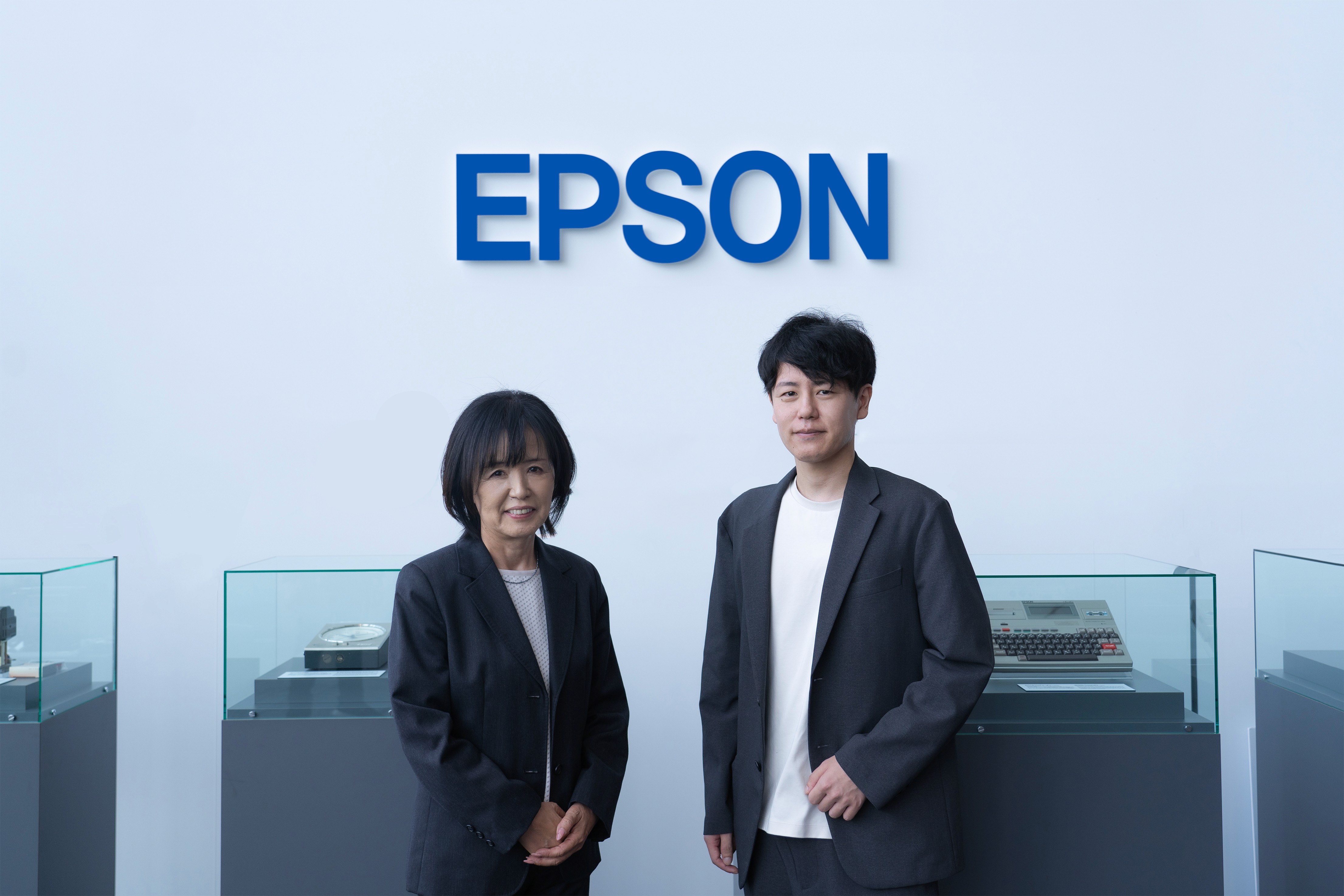
The interviewees for this session are Ms. Miyazawa and Mr. Takahashi from the DX Promotion Division of Seiko Epson Corporation.
Ms. Miyazawa worked on projector development after joining the company and has been engaged in web production–related work since 2008. In recent years, she has focused on web analytics and obtained her Web Analyst certification last year.
Mr. Takahashi joined the company in 2017 as a new graduate designer and was responsible for product design. Since 2022, he has transitioned to web-related work, primarily focusing on tool implementation and web analytics.
The interviewees for this session are Ms. Miyazawa and Mr. Takahashi from the DX Promotion Division of Seiko Epson Corporation.
Ms. Miyazawa worked on projector development after joining the company and has been engaged in web production–related work since 2008. In recent years, she has focused on web analytics and obtained her Web Analyst certification last year.
Mr. Takahashi joined the company in 2017 as a new graduate designer and was responsible for product design. Since 2022, he has transitioned to web-related work, primarily focusing on tool implementation and web analytics.
Driving smoother collaboration with business teams through A/B testing
Driving smoother collaboration with business teams through A/B testing
Q: Could you introduce your current mission, your connection with Ptengine, and the background of its adoption?
Q: Could you introduce your current mission, your connection with Ptengine, and the background of its adoption?
Ms. Miyazawa: The mission of our DX Promotion Division is to improve the digital customer experience. For each business unit, the most important touchpoint with customers is the website. We work closely with different departments while promoting the development and improvement of our websites.
Our department’s KPIs are also linked with those of the business units, such as sales and lead generation. However, there are times when differences in opinion arise between the business units and the DX Promotion Division, which is responsible for website production.
The content that business units want to showcase is not always the same as what users actually want to see, and finding the right balance can be challenging. In such situations, we began to see A/B testing as an effective way to provide evidence when communicating with business teams. With objective data to support our proposals, discussions with the business units have become much smoother.
Ms. Miyazawa: The mission of our DX Promotion Division is to improve the digital customer experience. For each business unit, the most important touchpoint with customers is the website. We work closely with different departments while promoting the development and improvement of our websites.
Our department’s KPIs are also linked with those of the business units, such as sales and lead generation. However, there are times when differences in opinion arise between the business units and the DX Promotion Division, which is responsible for website production.
The content that business units want to showcase is not always the same as what users actually want to see, and finding the right balance can be challenging. In such situations, we began to see A/B testing as an effective way to provide evidence when communicating with business teams. With objective data to support our proposals, discussions with the business units have become much smoother.
The decisive factor was the support that felt like “working side by side as one team.”
The decisive factor was the support that felt like “working side by side as one team.”
Mr. Takahashi: Initially, we tried using Google Optimize for A/B testing, but the setup was quite complex and the implementation process was difficult. When we later learned that the service would be discontinued last summer, we began searching for an alternative A/B testing tool and eventually discovered Ptengine.
At that time, we evaluated about six companies in parallel. In addition to functionality, the decisive factor was the support system. Even during the evaluation phase, we received quick responses whenever we had questions, and after implementation we continued to experience very attentive support.
The pricing was also reasonable, and the usability of the heatmap feature was excellent. We believed that members of the business teams would also be able to start using it quickly.
Mr. Takahashi: Since Google Optimize provided almost no support services, it was very difficult to respond when issues occurred, including problems related to complex configurations. Ptengine, on the other hand, was much more flexible in this regard. In addition, test results can be visualized quickly, and presenting the data visually makes it much easier for business teams to understand and accept the results, which was also very appealing.
Mr. Takahashi: Initially, we tried using Google Optimize for A/B testing, but the setup was quite complex and the implementation process was difficult. When we later learned that the service would be discontinued last summer, we began searching for an alternative A/B testing tool and eventually discovered Ptengine.
At that time, we evaluated about six companies in parallel. In addition to functionality, the decisive factor was the support system. Even during the evaluation phase, we received quick responses whenever we had questions, and after implementation we continued to experience very attentive support.
The pricing was also reasonable, and the usability of the heatmap feature was excellent. We believed that members of the business teams would also be able to start using it quickly.
Mr. Takahashi: Since Google Optimize provided almost no support services, it was very difficult to respond when issues occurred, including problems related to complex configurations. Ptengine, on the other hand, was much more flexible in this regard. In addition, test results can be visualized quickly, and presenting the data visually makes it much easier for business teams to understand and accept the results, which was also very appealing.

A/B testing is actively implemented across departments, from recruitment websites to B2B products
A/B testing is actively implemented across departments, from recruitment websites to B2B products
Q: Could you share any specific initiatives that have produced measurable results?
Q: Could you share any specific initiatives that have produced measurable results?
1. Optimizing the internship application flow
1. Optimizing the internship application flow
1. Optimizing the internship application flow
Our initial attempt focused on optimizing Epson’s recruitment website.
In recent years, within the new graduate recruitment market, more and more students decide which companies to apply to based on their internship experience. At our company, most students who eventually receive job offers have also participated in internship programs.
Therefore, with the goal of increasing the number of internship applications originating from the recruitment website, we worked closely with the HR department to improve the site. Rather than relying on subjective assumptions, we implemented initiatives based on hypotheses and data validation, with A/B testing playing a key role in the process.
[Target]
• Increase the number of internship applications coming from the recruitment website
[Hypotheses]
• The internship introduction page did not include a clear link directing users to the application (Entry) page, making it difficult for students to complete the application promptly.
• The page title used the English word “Internship,” which was not immediately intuitive for students to recognize as internship information.
[Actions & Results]
• Added a direct link to the application page within the internship program page
• Changed the page title from “Internship” to 「インターンシップ(Internship)」
Through these A/B tests, we found that compared with the previous version, the conversion rate from the internship page to the application page increased by 30%, while the click-through rate of the internship page itself doubled.
An interesting insight was the improvement brought by changing the wording to 「インターンシップ」. Originally, the English term “Internship” had been used from a design perspective on the recruitment website. However, from the perspective of students actually visiting the site, the katakana expression 「インターンシップ」 proved to be more intuitive and easier to understand.
Although this may seem like a small change, it was the A/B test that clearly revealed its impact.
In addition, A/B testing was conducted at several key points within the internship application flow. Combined with initiatives from the recruitment team to guide applicants, a series of comprehensive optimizations were implemented. As a result, the total number of applications increased by 25% compared with the same period last year, effectively boosting the overall number of applicants.
Our initial attempt focused on optimizing Epson’s recruitment website.
In recent years, within the new graduate recruitment market, more and more students decide which companies to apply to based on their internship experience. At our company, most students who eventually receive job offers have also participated in internship programs.
Therefore, with the goal of increasing the number of internship applications originating from the recruitment website, we worked closely with the HR department to improve the site. Rather than relying on subjective assumptions, we implemented initiatives based on hypotheses and data validation, with A/B testing playing a key role in the process.
[Target]
• Increase the number of internship applications coming from the recruitment website
[Hypotheses]
• The internship introduction page did not include a clear link directing users to the application (Entry) page, making it difficult for students to complete the application promptly.
• The page title used the English word “Internship,” which was not immediately intuitive for students to recognize as internship information.
[Actions & Results]
• Added a direct link to the application page within the internship program page
• Changed the page title from “Internship” to 「インターンシップ(Internship)」
Through these A/B tests, we found that compared with the previous version, the conversion rate from the internship page to the application page increased by 30%, while the click-through rate of the internship page itself doubled.
An interesting insight was the improvement brought by changing the wording to 「インターンシップ」. Originally, the English term “Internship” had been used from a design perspective on the recruitment website. However, from the perspective of students actually visiting the site, the katakana expression 「インターンシップ」 proved to be more intuitive and easier to understand.
Although this may seem like a small change, it was the A/B test that clearly revealed its impact.
In addition, A/B testing was conducted at several key points within the internship application flow. Combined with initiatives from the recruitment team to guide applicants, a series of comprehensive optimizations were implemented. As a result, the total number of applications increased by 25% compared with the same period last year, effectively boosting the overall number of applicants.
2. Optimizing the lead generation flow for semiconductor products
2. Optimizing the lead generation flow for semiconductor products
Another initiative focused on optimizing lead generation for semiconductor products, primarily around improving the user path to the document request page and increasing the efficiency of sales activities.
Previously, we had attempted page adjustments such as strengthening link visibility or increasing the number of links on other pages, but these efforts did not deliver the desired results. As a result, we decided to test a more engaging approach by introducing a web engagement popup.
However, because popups can potentially have a negative impact on user experience and even produce the opposite effect, we conducted A/B testing before full implementation to understand actual user reactions.
[Challenge]
• Low traffic from the semiconductor product homepage to the document request page.
[Actions & Results]
• Conducted an A/B test comparing two scenarios: with a popup on the homepage and without a popup. The popup displayed a thumbnail of new materials and guided users to the document request page.
The results showed that when the popup was displayed, the number of clicks to the document request page was twice as high as when no popup was shown. Based on these results, we decided to officially implement the popup solution.
Another initiative focused on optimizing lead generation for semiconductor products, primarily around improving the user path to the document request page and increasing the efficiency of sales activities.
Previously, we had attempted page adjustments such as strengthening link visibility or increasing the number of links on other pages, but these efforts did not deliver the desired results. As a result, we decided to test a more engaging approach by introducing a web engagement popup.
However, because popups can potentially have a negative impact on user experience and even produce the opposite effect, we conducted A/B testing before full implementation to understand actual user reactions.
[Challenge]
• Low traffic from the semiconductor product homepage to the document request page.
[Actions & Results]
• Conducted an A/B test comparing two scenarios: with a popup on the homepage and without a popup. The popup displayed a thumbnail of new materials and guided users to the document request page.
The results showed that when the popup was displayed, the number of clicks to the document request page was twice as high as when no popup was shown. Based on these results, we decided to officially implement the popup solution.
Accelerating improvement initiatives through barrier-free collaboration among site owners
Accelerating improvement initiatives through barrier-free collaboration among site owners
Q: For a large website such as a corporate site, what is the key to continuously conducting tests?
Q: For a large website such as a corporate site, what is the key to continuously conducting tests?
Mr. Takahashi: I believe a major reason is that we are a manufacturing company, where the mindset of continuous improvement, similar to the PDCA cycle, is deeply embedded in the organization. The process of identifying problems and solving them step by step is already widely shared within the company.
Ms. Miyazawa: Yes, that’s right. In fact, there is not much resistance within the company to the idea of improving websites. Each business unit has a person responsible for its website, and overall management is handled by those owners. The authority to decide on improvements also largely lies with them.
In addition, when conducting A/B testing, it is different from directly modifying the live environment. As long as we explain that “this is a test” and “it is temporary,” most people understand and agree. We rarely feel barriers between departments, and we can move forward very flexibly, which is a major advantage.
Mr. Takahashi: I believe a major reason is that we are a manufacturing company, where the mindset of continuous improvement, similar to the PDCA cycle, is deeply embedded in the organization. The process of identifying problems and solving them step by step is already widely shared within the company.
Ms. Miyazawa: Yes, that’s right. In fact, there is not much resistance within the company to the idea of improving websites. Each business unit has a person responsible for its website, and overall management is handled by those owners. The authority to decide on improvements also largely lies with them.
In addition, when conducting A/B testing, it is different from directly modifying the live environment. As long as we explain that “this is a test” and “it is temporary,” most people understand and agree. We rarely feel barriers between departments, and we can move forward very flexibly, which is a major advantage.

Ptengine introduced into new employee training as well. The goal is to create an environment where “data-driven decision making” becomes the norm.
Ptengine introduced into new employee training as well. The goal is to create an environment where “data-driven decision making” becomes the norm.
Q: Collaboration with business units and site owners seems very smooth. Could you also elaborate on the initiatives your company has taken to promote internal adoption?
Q: Collaboration with business units and site owners seems very smooth. Could you also elaborate on the initiatives your company has taken to promote internal adoption?
Ms. Miyazawa: First, we organized briefing sessions for each business unit. After introducing Ptengine’s functions and usage to the website owners in each department, they began to use the tool more proactively.
This year, we also conducted sessions for all new employees in the DX Promotion Division, where they learned and practiced using Ptengine for web analytics. The suggestions that came from perspectives different from ours were very interesting, and we hope to continue this initiative every year.
Mr. Takahashi: The role of the DX Promotion Division is to build the foundational environment for website improvement across the entire company. Our ultimate goal is for every business unit to optimize their websites based on data. Therefore, we place great importance on first running the PDCA cycle ourselves and continuously driving improvements through our own actions.
Ms. Miyazawa: First, we organized briefing sessions for each business unit. After introducing Ptengine’s functions and usage to the website owners in each department, they began to use the tool more proactively.
This year, we also conducted sessions for all new employees in the DX Promotion Division, where they learned and practiced using Ptengine for web analytics. The suggestions that came from perspectives different from ours were very interesting, and we hope to continue this initiative every year.
Mr. Takahashi: The role of the DX Promotion Division is to build the foundational environment for website improvement across the entire company. Our ultimate goal is for every business unit to optimize their websites based on data. Therefore, we place great importance on first running the PDCA cycle ourselves and continuously driving improvements through our own actions.
Further advancing website optimization that directly contributes to revenue
Further advancing website optimization that directly contributes to revenue
Q: Could you share your future plans for using Ptengine?
Q: Could you share your future plans for using Ptengine?
Ms. Miyazawa: By leveraging Ptengine, we hope to enhance the Epson brand image and increase user engagement on the corporate website. At the same time, we would like to use Ptengine as an entry point to promote website data analysis among other website-related personnel who are not yet involved in analytics.
Mr. Takahashi: As the DX Promotion Division, we believe it is very important to drive tangible growth in profit and revenue through website optimization, and to clearly demonstrate our contributions to each business unit with data. Looking ahead, we will also consider further deepening and expanding the adoption of Ptengine in order to generate even greater results.
Ms. Miyazawa: By leveraging Ptengine, we hope to enhance the Epson brand image and increase user engagement on the corporate website. At the same time, we would like to use Ptengine as an entry point to promote website data analysis among other website-related personnel who are not yet involved in analytics.
Mr. Takahashi: As the DX Promotion Division, we believe it is very important to drive tangible growth in profit and revenue through website optimization, and to clearly demonstrate our contributions to each business unit with data. Looking ahead, we will also consider further deepening and expanding the adoption of Ptengine in order to generate even greater results.