Orbis Inc.
Orbis Inc.
Turning Customer Understanding into Results: Orbis’s “Customer-First” Approach and Ptengine in In-House Ad Operations
Turning Customer Understanding into Results: Orbis’s “Customer-First” Approach and Ptengine in In-House Ad Operations
Why Is Orbis Able to Turn “Customer Understanding” into Real Operational Results?
Why Is Orbis Able to Turn “Customer Understanding” into Real Operational Results?
Amid intensifying competition in the beauty industry, Orbis Inc. began strengthening its in-house advertising operations about two years ago to further improve operational efficiency. The results have been significant. In fact, the improvement in LP creative iteration efficiency was cited as one of the key factors behind achieving the company’s 2024 budget targets.
While many companies emphasize the importance of “customer understanding,” why is Orbis able to truly translate this concept into day-to-day operations?
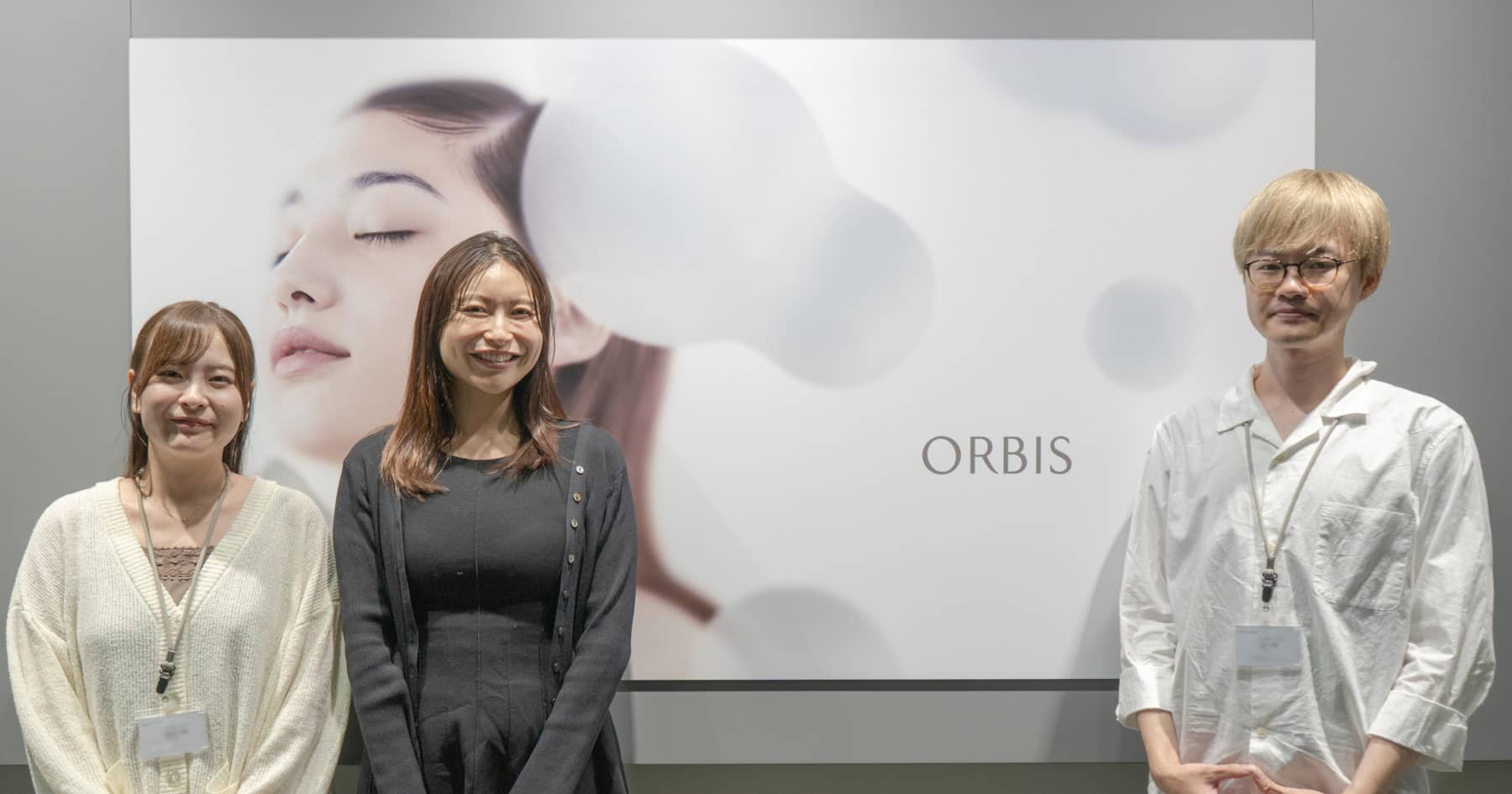
For this interview, we spoke with Mr. Terui, Head of the New Customer Acquisition Department, Mr. Imai, Assistant Manager of the Advertising Operations Group, and Mr. Sasaki, Creative Team Lead. They shared their practical approaches and insights.
Amid intensifying competition in the beauty industry, Orbis Inc. began strengthening its in-house advertising operations about two years ago to further improve operational efficiency. The results have been significant. In fact, the improvement in LP creative iteration efficiency was cited as one of the key factors behind achieving the company’s 2024 budget targets.
While many companies emphasize the importance of “customer understanding,” why is Orbis able to truly translate this concept into day-to-day operations?
For this interview, we spoke with Mr. Terui, Head of the New Customer Acquisition Department, Mr. Imai, Assistant Manager of the Advertising Operations Group, and Mr. Sasaki, Creative Team Lead. They shared their practical approaches and insights.
Summary
Summary
Who should read this article
Who should read this article
Who should read this article
• Marketing leaders who operate in-house advertising models or want to translate “customer understanding” into concrete day-to-day marketing practices
• Organizational leaders seeking to improve LPO efficiency and build a data-driven decision-making system
• Marketing leaders who operate in-house advertising models or want to translate “customer understanding” into concrete day-to-day marketing practices
• Organizational leaders seeking to improve LPO efficiency and build a data-driven decision-making system
Orbis’s key initiatives
Orbis’s key initiatives
Orbis’s key initiatives
• Translating the company guideline “Customer First” into concrete practices by systematically integrating and leveraging both qualitative and quantitative data to build a comprehensive customer understanding framework
• Establishing high-quality internal communication mechanisms and a continuous improvement cycle within teams based on customer insights
• Translating the company guideline “Customer First” into concrete practices by systematically integrating and leveraging both qualitative and quantitative data to build a comprehensive customer understanding framework
• Establishing high-quality internal communication mechanisms and a continuous improvement cycle within teams based on customer insights
Results achieved with Ptengine
Results achieved with Ptengine
Results achieved with Ptengine
• Translating the company guideline “Customer First” into concrete practices by systematically integrating and leveraging both qualitative and quantitative data to build a comprehensive customer understanding framework
• Establishing high-quality internal communication mechanisms and a continuous improvement cycle within teams based on customer insights
• Translating the company guideline “Customer First” into concrete practices by systematically integrating and leveraging both qualitative and quantitative data to build a comprehensive customer understanding framework
• Establishing high-quality internal communication mechanisms and a continuous improvement cycle within teams based on customer insights
Systematizing Customer Understanding and Building an Executable Foundation with Ptengine
Systematizing Customer Understanding and Building an Executable Foundation with Ptengine
Q: Many companies emphasize the importance of customer understanding. How has Orbis been able to translate it into actual business processes?
Q: Many companies emphasize the importance of customer understanding. How has Orbis been able to translate it into actual business processes?
Mr. Terui: Orbis has eight behavioral principles to ensure the realization of our brand vision, and one of them is “Customer First.” This means always thinking from the customer’s perspective. We believe that the deeper our understanding of customers becomes, the clearer the value Orbis should deliver and the messages we need to communicate.
While product descriptions are subject to restrictions under Japan’s Pharmaceutical and Medical Device Act (PMD Act), and advertising methods also have certain limitations, a deeper understanding of customers allows us to identify potential audiences and expand our reach. At the same time, it helps us form a clearer picture of our existing customers.
Ultimately, this enables us to more concretely design what message should be delivered and to which customers.
Mr. Terui: Orbis has eight behavioral principles to ensure the realization of our brand vision, and one of them is “Customer First.” This means always thinking from the customer’s perspective. We believe that the deeper our understanding of customers becomes, the clearer the value Orbis should deliver and the messages we need to communicate.
While product descriptions are subject to restrictions under Japan’s Pharmaceutical and Medical Device Act (PMD Act), and advertising methods also have certain limitations, a deeper understanding of customers allows us to identify potential audiences and expand our reach. At the same time, it helps us form a clearer picture of our existing customers.
Ultimately, this enables us to more concretely design what message should be delivered and to which customers.

Interpreting Customer Understanding Through Quantitative and Qualitative Data: What Ptengine Helped Visualize
Interpreting Customer Understanding Through Quantitative and Qualitative Data: What Ptengine Helped Visualize
Q: What specific actions have you taken to truly advance customer understanding?
Q: What specific actions have you taken to truly advance customer understanding?
Mr. Terui: To better understand our customers, we mainly approach it from three perspectives:
1. Quantitative data we can directly confirm internally: such as operational data from our own advertising campaigns.
2. Externally obtained data: including market research, one-on-one interviews with both non-purchasers and purchasers, call center inquiries, and direct conversations during face-to-face events with VIP customers. We collect information broadly from both qualitative and quantitative perspectives.
3. Our own LP behavioral data that had not been fully utilized: When analyzing and applying this data, Ptengine has become a powerful tool.
Mr. Imai: With the heatmap feature in Ptengine, customer behavior that previously could only be inferred can now be visualized through color. We are able to analyze why certain areas appear red and why some content is not being read, allowing us to build more precise hypotheses for further analysis.
In particular, insights from face-to-face interviews and other qualitative information greatly improve the accuracy and depth of hypotheses derived from heatmap analysis.
Mr. Terui: To better understand our customers, we mainly approach it from three perspectives:
1. Quantitative data we can directly confirm internally: such as operational data from our own advertising campaigns.
2. Externally obtained data: including market research, one-on-one interviews with both non-purchasers and purchasers, call center inquiries, and direct conversations during face-to-face events with VIP customers. We collect information broadly from both qualitative and quantitative perspectives.
3. Our own LP behavioral data that had not been fully utilized: When analyzing and applying this data, Ptengine has become a powerful tool.
Mr. Imai: With the heatmap feature in Ptengine, customer behavior that previously could only be inferred can now be visualized through color. We are able to analyze why certain areas appear red and why some content is not being read, allowing us to build more precise hypotheses for further analysis.
In particular, insights from face-to-face interviews and other qualitative information greatly improve the accuracy and depth of hypotheses derived from heatmap analysis.

The Evolution of Orbis’s Marketing System with Ptengine: From Mindset Transformation to Efficiency Gains
The Evolution of Orbis’s Marketing System with Ptengine: From Mindset Transformation to Efficiency Gains
Organizational Change and Mindset Shifts Driven by Strengthening In-House Operations
Organizational Change and Mindset Shifts Driven by Strengthening In-House Operations
Q: What kinds of changes have you observed as you moved toward in-house operations?
Q: What kinds of changes have you observed as you moved toward in-house operations?
Mr. Terui: In the past, when all advertising was managed by agencies, most improvement initiatives were led by the agencies. Our role was mainly limited to making small adjustments, so we rarely took the initiative to check heatmaps or identify areas for improvement ourselves.
Now, however, our in-house advertising team manages the planning and production of LPs and banners independently. As a result, opportunities for discussion and idea exchange among employees have increased. I feel that a culture is gradually taking shape within the company where employees think more deeply and create creative content from the customer’s perspective.
Mr. Imai: The number of members involved in advertising operations has also grown from just one person at the beginning to a team of six today. We initially started with search advertising, and as operations gradually stabilized, the team’s overall confidence increased.
In addition, after strengthening the operational structure, the latest insights, such as whether the user age demographics have changed, can now be shared immediately during meetings. This has improved both the freshness of information and the speed of decision-making.
Mr. Terui: In the past, when all advertising was managed by agencies, most improvement initiatives were led by the agencies. Our role was mainly limited to making small adjustments, so we rarely took the initiative to check heatmaps or identify areas for improvement ourselves.
Now, however, our in-house advertising team manages the planning and production of LPs and banners independently. As a result, opportunities for discussion and idea exchange among employees have increased. I feel that a culture is gradually taking shape within the company where employees think more deeply and create creative content from the customer’s perspective.
Mr. Imai: The number of members involved in advertising operations has also grown from just one person at the beginning to a team of six today. We initially started with search advertising, and as operations gradually stabilized, the team’s overall confidence increased.
In addition, after strengthening the operational structure, the latest insights, such as whether the user age demographics have changed, can now be shared immediately during meetings. This has improved both the freshness of information and the speed of decision-making.
Significant LPO Efficiency Gains Achieved with Ptengine
Significant LPO Efficiency Gains Achieved with Ptengine
Since introducing Ptengine in September 2023, the company has continuously expanded its use both in scope and depth. This has maximized the impact of strengthening its marketing operations and delivered significant efficiency improvements.
Since introducing Ptengine in September 2023, the company has continuously expanded its use both in scope and depth. This has maximized the impact of strengthening its marketing operations and delivered significant efficiency improvements.
Q: What role does Ptengine play within the overall New Customer Acquisition Department?
Q: What role does Ptengine play within the overall New Customer Acquisition Department?
Mr. Terui: I believe it is indispensable. If the CVR (conversion rate) increases by 5%, the number of new customers will also increase by 5%. That is why investing in this area is extremely important.
In fact, one of the key reasons we were able to achieve our 2024 budget target was the improvement in the efficiency of the LP (landing page) creative optimization cycle.
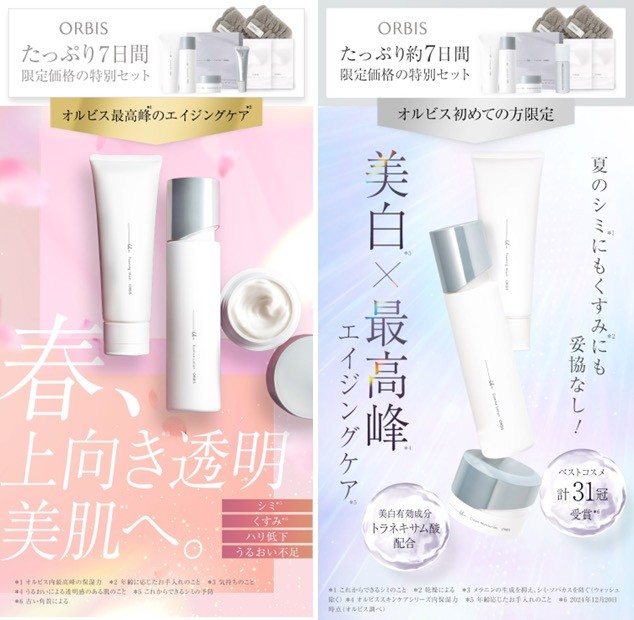
Mr. Sasaki: For example, we converted the static image in the LP’s first-view section into a video. At the same time, we adjusted the messaging according to seasonal skin concerns and designed pages that reflected the seasonal context, then conducted A/B tests.
With this initiative alone, it was common to see CVR improvements of 110% to 120%. Improvements of 105% or 110% occur frequently, and in some cases we have even achieved 120% to 130% gains.
Mr. Terui: I believe it is indispensable. If the CVR (conversion rate) increases by 5%, the number of new customers will also increase by 5%. That is why investing in this area is extremely important.
In fact, one of the key reasons we were able to achieve our 2024 budget target was the improvement in the efficiency of the LP (landing page) creative optimization cycle.
Mr. Sasaki: For example, we converted the static image in the LP’s first-view section into a video. At the same time, we adjusted the messaging according to seasonal skin concerns and designed pages that reflected the seasonal context, then conducted A/B tests.
With this initiative alone, it was common to see CVR improvements of 110% to 120%. Improvements of 105% or 110% occur frequently, and in some cases we have even achieved 120% to 130% gains.
Running Up to 30 A/B Tests in Parallel by Accelerating the PDCA Cycle
Running Up to 30 A/B Tests in Parallel by Accelerating the PDCA Cycle
Why has Ptengine played such an important role in advancing advertising operations, LPO, and in-house management?
Why has Ptengine played such an important role in advancing advertising operations, LPO, and in-house management?
Mr. Terui: Having this tool has helped create a team culture of “try first, then adjust.” At the same time, it has established a process for clarifying what should be validated, allowing this workflow to become embedded within the organization. This has been extremely important.
Mr. Sasaki: Previously, we created separate LPs for each verification item, and the tool we used at the time only allowed about three tests to run simultaneously. As the number of LPs increased, the workload for management and production became enormous.
However, after adopting Ptengine, each team member can operate much more freely with almost no restrictions, significantly accelerating the PDCA cycle for LP optimization. Currently, we have around 30 A/B tests running in parallel, making it an indispensable tool for us.
In addition, after introducing Ptengine, we now first validate ideas through A/B testing before deciding whether to increase the number of LPs. By identifying potentially effective content before formal production, we reduce unnecessary work while improving overall management efficiency.
Mr. Imai: Tests such as replacing the hero image on the homepage are very easy to run. Even someone without prior experience can quickly understand the process after trying it once and easily complete an initial validation.
At the same time, as we continue building our internal operations, there are still areas where we are exploring and learning. When we encounter questions, we can consult dedicated staff and also receive immediate assistance through chat support. This kind of support is extremely valuable to us and plays the role of a trusted advisor.
Mr. Terui: Having this tool has helped create a team culture of “try first, then adjust.” At the same time, it has established a process for clarifying what should be validated, allowing this workflow to become embedded within the organization. This has been extremely important.
Mr. Sasaki: Previously, we created separate LPs for each verification item, and the tool we used at the time only allowed about three tests to run simultaneously. As the number of LPs increased, the workload for management and production became enormous.
However, after adopting Ptengine, each team member can operate much more freely with almost no restrictions, significantly accelerating the PDCA cycle for LP optimization. Currently, we have around 30 A/B tests running in parallel, making it an indispensable tool for us.
In addition, after introducing Ptengine, we now first validate ideas through A/B testing before deciding whether to increase the number of LPs. By identifying potentially effective content before formal production, we reduce unnecessary work while improving overall management efficiency.
Mr. Imai: Tests such as replacing the hero image on the homepage are very easy to run. Even someone without prior experience can quickly understand the process after trying it once and easily complete an initial validation.
At the same time, as we continue building our internal operations, there are still areas where we are exploring and learning. When we encounter questions, we can consult dedicated staff and also receive immediate assistance through chat support. This kind of support is extremely valuable to us and plays the role of a trusted advisor.

Continuous Optimization Supported by Heatmap Analysis and A/B Testing — Team Discussions and Operational Structure
Continuous Optimization Supported by Heatmap Analysis and A/B Testing — Team Discussions and Operational Structure
Q: After introducing Ptengine, how have the team’s discussions and analysis methods changed?
Q: After introducing Ptengine, how have the team’s discussions and analysis methods changed?
Mr. Sasaki: Opportunities to discuss banner ads and LPs (landing pages) within the team have increased, and the amount of time spent thinking from the customer’s perspective has also grown.
We closely analyze how LPs are read through heatmaps, examining which banners users enter from, which elements attract the most attention, and identifying any areas in the first-view section that may create discomfort. We then compare these findings with various creative assets for further analysis.
Mr. Imai: Now we can view the overall connection between advertisements and LPs at a glance. If the intent of an ad banner does not align with the first-view content of the LP, the team frequently discusses it. Therefore, ensuring strong consistency between the two has become very important.
Mr. Sasaki: Opportunities to discuss banner ads and LPs (landing pages) within the team have increased, and the amount of time spent thinking from the customer’s perspective has also grown.
We closely analyze how LPs are read through heatmaps, examining which banners users enter from, which elements attract the most attention, and identifying any areas in the first-view section that may create discomfort. We then compare these findings with various creative assets for further analysis.
Mr. Imai: Now we can view the overall connection between advertisements and LPs at a glance. If the intent of an ad banner does not align with the first-view content of the LP, the team frequently discusses it. Therefore, ensuring strong consistency between the two has become very important.

A High-Frequency Review and Creative Generation Mechanism
A High-Frequency Review and Creative Generation Mechanism
Q: After conducting analysis, how do you turn ideas into creative initiatives and put them into action?
Q: After conducting analysis, how do you turn ideas into creative initiatives and put them into action?
Mr. Terui: Because we can now run a large number of tests simultaneously, it is essential to create an environment where ideas are constantly generated. We hold several all-hands meetings each month to brainstorm together.
In the past, we sometimes prioritized initiatives with relatively small impact. Now, we first define the topic, then discuss its potential impact and implementation speed, and adjust priorities accordingly.
Mr. Sasaki: I facilitate these meetings. I begin by setting the agenda around “the area we want to improve this time,” and then we move into creative discussions. Each team member is required to prepare at least one idea as an assignment, and we move forward from there.
Mr. Terui: Because we can now run a large number of tests simultaneously, it is essential to create an environment where ideas are constantly generated. We hold several all-hands meetings each month to brainstorm together.
In the past, we sometimes prioritized initiatives with relatively small impact. Now, we first define the topic, then discuss its potential impact and implementation speed, and adjust priorities accordingly.
Mr. Sasaki: I facilitate these meetings. I begin by setting the agenda around “the area we want to improve this time,” and then we move into creative discussions. Each team member is required to prepare at least one idea as an assignment, and we move forward from there.

Deepening Customer Understanding Through the Synergy of Organization and Tools
Deepening Customer Understanding Through the Synergy of Organization and Tools
Q: For the initiatives introduced today, what conditions or adjustments do you think are necessary for other brands or industries to apply them?
Q: For the initiatives introduced today, what conditions or adjustments do you think are necessary for other brands or industries to apply them?
Mr. Terui: Without a successful experience, it may be difficult to develop the willingness to “give it a try.” In our case, interviews with customers were a particularly important turning point. Hearing customers’ voices directly often leads to moments of realization, and those learnings can then be translated into tangible results. Once you have that kind of experience, a natural desire emerges to understand customers even more deeply.
As for validating ideas, what I find especially meaningful is that it is not about me instructing the team to “do this.” Instead, each team member deepens their own understanding of the customer and turns the ideas that emerge from that understanding into actual initiatives.
Mr. Terui: Without a successful experience, it may be difficult to develop the willingness to “give it a try.” In our case, interviews with customers were a particularly important turning point. Hearing customers’ voices directly often leads to moments of realization, and those learnings can then be translated into tangible results. Once you have that kind of experience, a natural desire emerges to understand customers even more deeply.
As for validating ideas, what I find especially meaningful is that it is not about me instructing the team to “do this.” Instead, each team member deepens their own understanding of the customer and turns the ideas that emerge from that understanding into actual initiatives.
Ptengine as the “Infrastructure for Customer Understanding”
Ptengine as the “Infrastructure for Customer Understanding”
Q: Finally, how would you describe Ptengine in one sentence?
Q: Finally, how would you describe Ptengine in one sentence?
Mr. Sasaki: In one phrase, it’s an “essential tool for LPO.”
Mr. Imai: An “indispensable presence.” Even when we face challenges with our initiatives, looking back at the various measures we have implemented with Ptengine often sparks new ideas. In that sense, it could also be called a “creative tool.”
Going forward, we hope to continue leveraging Ptengine to deepen our understanding of customers and turn those insights into tangible results.
Mr. Sasaki: In one phrase, it’s an “essential tool for LPO.”
Mr. Imai: An “indispensable presence.” Even when we face challenges with our initiatives, looking back at the various measures we have implemented with Ptengine often sparks new ideas. In that sense, it could also be called a “creative tool.”
Going forward, we hope to continue leveraging Ptengine to deepen our understanding of customers and turn those insights into tangible results.